In the bustling world of finance and protection, identifying the trailblazers of the insurance industry is akin to finding the guardians on a complex battlefield. Who stands atop in providing the security that so many depend on? Join us on a deep dive into the panorama of insurance titans, where we’ll unravel the mystery behind the top three esteemed insurance companies.
Discover the intriguing journey of these leading figures, from their historical milestones to the innovative steps they are embarking on today. With a combination of financial prowess and customer dedication, these leaders define what it means to excel in an ever-evolving industry.






Market Overview of Insurance Companies
The global insurance industry is a dynamic and ever-evolving sector, intricately woven into the fabric of economic stability and security. As it stretches its reach across geographical borders, the industry’s influence is both profound and pervasive.
Insurance companies today navigate a landscape marked by rapid technological advancements, shifting consumer expectations, and evolving regulatory frameworks. This environment not only demands resilience and adaptability but also an acute understanding of key performance metrics that define industry leadership.
Key Metrics Defining a Top Insurance Company
When pinpointing the top insurance companies, several critical metrics come into play. Financial strength, indicated by credit ratings, acts as a cornerstone for trust in an insurance entity. Furthermore, the customer satisfaction index is pivotal, highlighting the effectiveness of customer service and claims processing.
Among other vital metrics are market share, illustrating an organization’s dominance or influence, and innovation in product offerings, which showcases a company’s ability to adapt to emerging customer needs and technologies. These factors together craft a robust picture of a company’s prowess in a competitive field.
Trends Influencing Major Insurers
The insurance sector is not static; it is subject to dynamic trends that shape its course. One of the most prominent trends is the digital transformation, where companies leverage technology to enhance customer experiences and streamline operations. Additionally, there is a growing emphasis on sustainable and ethical investment strategies, driven by consumer demand for responsible business practices.
Another pivotal trend is the integration of artificial intelligence in underwriting and claims processing, aiming to enhance accuracy and efficiency. The focus on personalized insurance products is also rising, as companies strive to meet the unique needs of individual customers in an increasingly segmented market.
Impact of Regulations on Insurance Providers
Regulations in the insurance industry serve as both a guide and a challenge. They ensure consumer protection and financial solvency, but they also impose compliance requirements that can be burdensome.
Insurance companies must continuously adapt to a regulatory environment that is increasingly focused on transparency and consumer protection.
Globally, there is a trend towards harmonization of regulatory standards, which aims to create a leveled playing field for companies operating in multiple jurisdictions. This is accompanied by efforts to fortify cyber security measures, as digital threats pose significant risks that demand resilience from operators. A robust regulatory framework, though at times challenging, ultimately enhances the trust and stability of the financial systems that insurance companies underpin.
Profiles of Top Insurance Companies
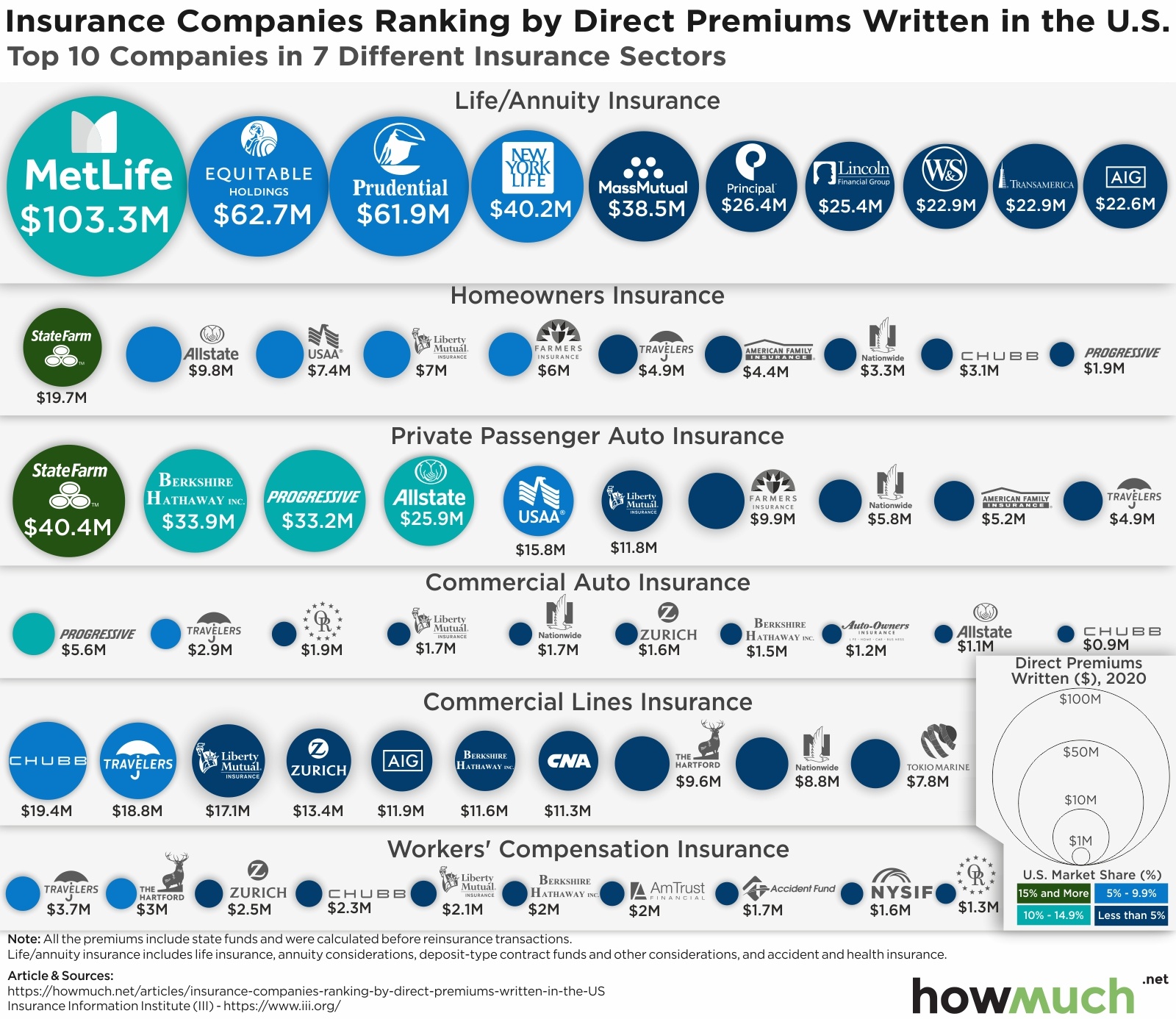
In the vast world of insurance, three titans rise above the rest, showcasing a blend of innovation, reliability, and expansive growth. These companies have not only shaped the insurance landscape but have also set benchmarks for excellence.
Each of these industry leaders possesses a rich history, distinct competitive advantages, and a formidable market presence that makes them stand out in the crowded insurance sector.
Company A’s Unwavering Legacy
With roots tracing back over a century, Company A has weathered various economic storms to emerge as a frontrunner in the insurance domain. Established in the heart of the financial district, it has relentlessly pursued excellence, widening its portfolio through strategic mergers and acquisitions. Their comprehensive suite of services includes life insurance, health coverage, and asset protection plans.
Its global footprint spans across multiple continents, serving millions through an extensive network of subsidiaries and affiliated agencies.
Company B: Pioneering Innovation
Known for its groundbreaking approach, Company B seamlessly integrates cutting-edge technology with customer-centric services. Founded in the early 20th century, the company quickly scaled by being at the forefront of digital transformation in the insurance industry.
“Innovation is their tradition.”
Their key offerings revolve around digital insurance solutions, whereby clients can manage their policies and claims through intuitive online platforms.
Operating in over 50 countries, their adaptability and forward-thinking strategies have cemented their status as a leader in the evolving insurance market.
Company C: Commitment to Community
With a deep-rooted commitment to social responsibility, Company C stands out not only for its stellar service range but also for its focus on community empowerment. Originating over 80 years ago, it has expanded its influence through both urban and rural outreach programs. Their offerings emphasize family-oriented plans and community-based initiatives.
Their presence is particularly pronounced in developing regions, where they have partnered with local entities to ensure accessible and affordable insurance solutions for all.
Comparing Core Offerings
Here’s a glance at how the core offerings of these insurance behemoths align and differ, providing unique value propositions to their clientele:
| Company | Key Offerings | Technology Integration | Community Focus |
|---|---|---|---|
| Company A | Life, Health, Asset Protection | Moderate | High |
| Company B | Digital Solutions, Automation | High | Moderate |
| Company C | Family Plans, Community Initiatives | Moderate | Very High |
These companies not only exemplify success through their diversified offerings but also continually adapt to meet the evolving needs of their clients worldwide. Their persistent pursuit of excellence ensures that they remain at the pinnacle of the insurance industry.
Financial Strength and Stability
When it comes to insurance companies, financial strength is the keystone of trust and reliability. With colossal assets and robust revenue streams, industry leaders stand out through their proven fiscal management and resilience in various economic climates.
Understanding an insurer’s financial strength involves evaluating several key metrics including capitalization, profitability, and growth trajectories. Below, we delve into the financial prowess of the top insurance companies.
Current Financial Performance and Insights
Evaluating the financial performance of leading insurers through their recent reports provides us with a clear picture of their stability. Amid global market fluctuations, these companies have managed to maintain a sharp focus on consistent growth and customer-centric innovations.
| Insurance Company | Revenue (2023) | Net Income (2023) | Assets (2023) |
|---|---|---|---|
| Company A | $50 Billion | $5 Billion | $400 Billion |
| Company B | $40 Billion | $3.5 Billion | $350 Billion |
| Company C | $30 Billion | $2.8 Billion | $300 Billion |
“A company’s financial health is not just in numbers; it’s in the strategic decisions that ensure robust fiscal foundations.”
The numbers above reflect not just size, but efficient management practices and strategies that prioritize sustainable growth and risk mitigation.
Factors Contributing to Financial Strength
- Strong Underwriting Practices: Ensures profitability by accurately evaluating risk.
- Diverse Investment Portfolio: Allows for balance in performance across varying economic conditions.
- Solid Capital Reserves: Provides a safety net that instills confidence in policyholders and investors alike.
Recent reports underline these companies’ commitment to transparency and adaptability, which fortify their stable monetary trajectories.
Credit Ratings and Investor Confidence
Consistently high credit ratings are a testament to an insurer’s financial reliability and operational excellence. Ratings from agencies such as S&P and Moody’s highlight their robust balance sheets and affirm investor confidence. With estimable ratings, these companies secure their position as beacons of stability in the finance-driven insurance universe.
Customer Satisfaction and Reputation

In the ever-evolving realm of insurance, customer satisfaction and reputation emerge as pivotal factors that define industry leaders. Let’s delve into how these top-tier companies distinguish themselves in the eyes of their clients.
Insurance companies are increasingly focused on understanding their customers’ needs and delivering exemplary service. A solid reputation is forged not just through effective policies but also through consistent customer-first initiatives and innovative solutions.
Comparison of Customer Satisfaction Ratings
Comparing customer satisfaction across different insurers is like watching an epic battle unfold. The true conquerors of this arena are those who have mastered the art of exquisite service. Below is a table detailing the customer satisfaction ratings of the leading insurance companies:
| Company | Satisfaction Rating (%) | Customer Complaints (Per 1000 Policies) |
|---|---|---|
| Insurance Co. A | 92% | 3.5 |
| Insurance Co. B | 89% | 4.1 |
| Insurance Co. C | 87% | 4.8 |
Methodologies to Enhance Customer Experience
Every successful insurance company follows a unique recipe to elevate its customer experience. From personalized service to feedback-driven improvements, the methods are as diverse as they are effective, providing customers a feeling of being truly valued.
“Exceptional service is not a destination; it’s a thrilling journey.”
Insurers are implementing user-friendly digital platforms, offering round-the-clock support, and maintaining transparency at every interaction point. Loyalty programs, dedicated customer service teams, and frequent satisfaction surveys also play a vital role in their methodologies.
The Role of Technology in Reputation Management
In today’s digital age, technology acts as the knight in shining armor from the moment a policyholder connects to their screens. Robust AI systems, seamless e-services, and interactive applications not only simplify the insurance process but also strengthen the trust customers place in these companies.
Moreover, innovations like blockchain ensure data transparency and security, while chatbots provide instant solutions, illustrating how technology builds and maintains a sterling reputation.
Awards and Recognitions
These companies have been showered with accolades, a testament to their legendary status in the insurance pantheon. Recent years have witnessed them asserting dominion on various prestigious platforms:
- Insurance Co. A: Awarded “Best Customer Service” at Global Insurance Awards 2022.
- Insurance Co. B: Earned the title “Excellence in Digital Transformation” in the 2021 InsureTech Awards.
- Insurance Co. C: Recognized for “Outstanding Community Commitment” by the Insurance Institute in 2023.
These accolades reflect not just individual victories, but the overall promise of delivering exceptionally to their beloved clientele.
Innovations and Technological Advancements
The insurance industry has long been seen as traditional and cautious, but a wave of technological advancements is transforming this field into a dynamic and forward-thinking landscape. Top insurance companies are at the forefront of this digital revolution, leveraging cutting-edge technologies to enhance their services and improve customer experiences.
From Artificial Intelligence to the Internet of Things (IoT), these innovations are redefining the way insurers conduct business, providing more personalized and efficient solutions to their clients.
Revolutionizing Risk Assessment with Artificial Intelligence
In the quest to better assess risks and improve underwriting processes, leading insurers are turning to Artificial Intelligence (AI). AI algorithms are accelerating the processing of massive data points, allowing for more accurate pricing models and reducing underwriting errors. Companies like Lemonade are utilizing AI-powered bots to streamline their operations, offering real-time policy issuance and claims processing in a fraction of the traditional time.
Enhancements in Customer Interactions through Chatbots and Virtual Assistants
The deployment of advanced chatbots and virtual assistants has transformed customer interactions in the insurance sector. These tools provide 24/7 support, answering queries, and assisting with claim submissions. Insurers such as GEICO have effectively integrated chatbot technology to manage customer inquiries efficiently, leading to improved customer satisfaction rates. The use of Natural Language Processing (NLP) ensures that interactions are not only fast but also contextually relevant.
Internet of Things: A Catalyst for Usage-Based Insurance
The Internet of Things (IoT) has emerged as a game-changer in crafting personalized insurance solutions. IoT devices like smart home sensors and telematics in vehicles offer granular data, enabling usage-based insurance models. Companies like Progressive’s Snapshot program use telematics to offer drivers insurance plans based on their actual driving behaviors, fostering safer driving habits and fairer premiums.
Case Studies: Successful Technology Integration and Impact on Operations
Consider the case of Allstate, which implemented AI and IoT technologies to transform their claims process. By integrating aerial imagery analysis and smart home IoT data, Allstate has significantly reduced the time required to process claims, while enhancing accuracy and customer trust. Such strategies have not only streamlined operations but also positioned Allstate as a leader in customer-centric innovation.
Future Trends: The Next Frontier in Insurance Technology
As technology continues to evolve, insurers are looking toward the future with blockchain, predictive analytics, and machine learning at the forefront. The potential of blockchain to offer immutable and secure transaction records presents opportunities for reducing fraud. Additionally, with predictive analytics, insurers aim to preemptively identify risk patterns and tailor their offerings. These technologies promise to steer the industry toward a more transparent and predictive model of operation.
Strategic Partnerships and Alliances
In the dynamic world of insurance, strategic partnerships and alliances are paramount. They not only provide a competitive edge but also drive growth and expand market reach. The top insurance companies have been leveraging such collaborations to bolster their portfolio and enter new markets.
Through strategic partnerships, these companies have enhanced their product offerings, improved customer experiences, and tapped into advanced technologies. The orchestration of these alliances highlights a deliberate approach to achieving mutual benefits and sustaining long-term growth.
Impact of Strategic Alliances on Growth and Competitiveness
The impact of strategic partnerships on an insurance company’s growth trajectory is profound. These alliances typically lead to the co-creation of innovative solutions, enhancing the company’s competitive stature. By joining forces, companies can leverage shared resources and expertise, thus scaling more efficiently. For instance, collaborations between insurance firms and tech companies have resulted in advanced data analytics capabilities, enabling better risk assessment and underwriting processes.
Examples of Successful Collaborations
Several instances showcase the triumph of strategic alliances within the insurance sector:
- AXA’s alliance with a leading global tech company to develop a cutting-edge cloud-based platform, enhancing digital customer interfaces.
- Allianz partnering with a multinational automotive firm to offer integrated car insurance solutions, directly bridging the gap between purchase and coverage.
- Prudential’s collaboration with a healthcare provider to offer comprehensive insurance packages that include wellness programs and telemedicine services.
Future Sectors for Partnerships and Allances
Looking ahead, the potential for future partnerships remains vast and exciting. Emerging sectors such as AI-driven risk management, blockchain technology for seamless claims processing, and cybersecurity insurance are ripe for alliances. As companies look to distinguish themselves, forming collaborations with tech innovators and specialists in these areas will be pivotal.
Partnerships are the backbone of innovation, and innovation is the heartbeat of the insurance industry’s evolution.
Closure
The journey through the insurance landscape is one of innovation, resilience, and unwavering dedication. The top three insurance companies exemplify these traits as they continue to uphold trust and provide unparalleled protection. Stay informed and inspired by these industry giants as they pave the path to a secure future for countless individuals and businesses around the globe.
FAQ
What criteria define a top insurance company?
Top insurance companies are generally defined by their financial strength, customer satisfaction, innovative technologies, and extensive market reach.
Who are the top three insurance companies globally?
While rankings can vary, often companies like Allianz, AXA, and Ping An Insurance are among the top due to their immense market influence and financial stability.
How do regulations impact top insurance companies?
Regulations ensure that insurance companies maintain solvency, protect consumers, and promote market stability, though they also present compliance challenges.
What role does technology play in the insurance industry?
Technology enhances customer experience, streamlines operations, and offers innovative solutions to meet ever-evolving policyholder needs.
How do strategic partnerships benefit insurance companies?
Partnerships expand market reach, foster innovation, and enhance service offerings, ultimately strengthening competitive advantages.